What is PERC technology in solar cells?
How the solar cell works: In the silicon crystal solar cell, after hitting the cell, the sunlight causes the release of an electron and thus the conversion of electrical energy. A percentage of the photons hitting the solar cell do not have the ability to release electrons, after passing by the electron collides with the back layer of the cell and causes heat in the solar cell. In the long term, this process leads to a decrease in the efficiency and effectiveness of the panel at high temperatures.
PERC technology:In PERC technology, from a reflective layer The detector is used in the back of the cell, if the photons in the sunlight could not release the electron in the first attempt, after hitting the end layer, they are reflected, which increases the probability of electron release. In this case, the losses of the solar cell will be significantly reduced, thereby increasing the efficiency and effectiveness of the solar cell.
The advantage of PERC technology: Perc cell technology makes photons more to be received by silicon. This means that each cell produces a little more electricity than a conventional crystal cell. The maximum efficiency of this new technology is about 23%, while the common monocrystalline silicon cells are about 21%. By producing significant voltage in low light, it promises to be more efficient than silicon solar cells. Perc technology only reduces losses in the range of the solar cell.
Monofacial or Bifacial panel
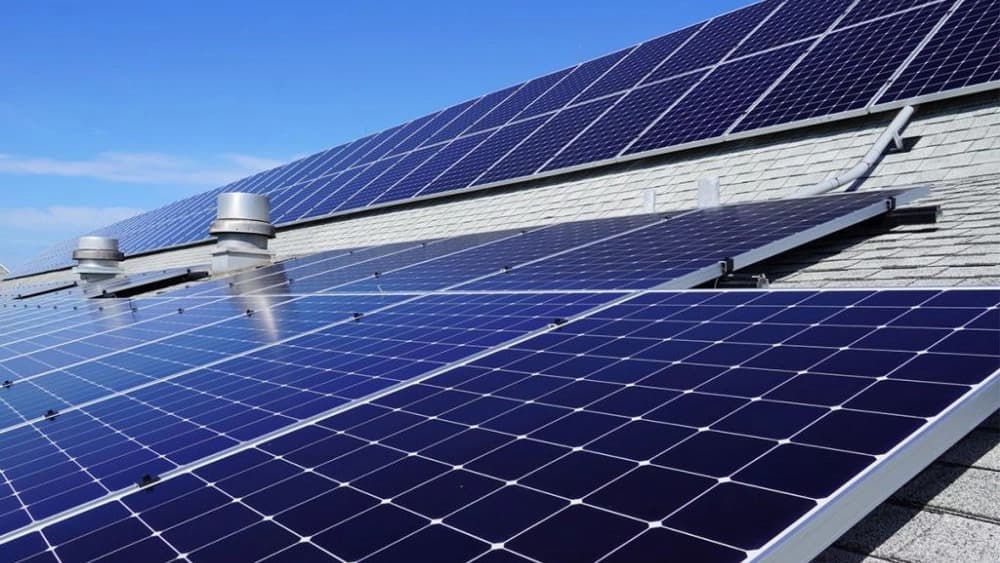
Monofacial panel: This type of panel can use only one side, the side facing the sun, to convert sunlight energy into electricity.
According to recent research and experiments, if the other side of the solar panel can also use the sunlight emitted from the ground under its surface and perform energy conversion, the amount of electricity produced by the solar panel will increase dramatically.
Bifacial panel: Bifacial solar cells are designed so that light enters it from both sides. The front surface of the cell is similar to monofacial solar cells, the most important difference of bifacial panels is the structure of their back surface. Instead of covering the entire back surface with a reflective aluminum surface, a finger grid is used to allow sunlight to reach the back surface.
Perc solar panel industry in the market
Today, most of the solar panels produced, especially the monocrystalline type, are all of the flake type. The manufacturing industry of this model of solar cells is relatively easy. Manufacturers use the same equipment and materials used to make conventional solar cells. Sanat Nu Perak can be added to mono and polysilicon solar cells, and it also gives good results in bimodal applications. The ease of construction has led to a sharp increase in the production of this technology since 2010.